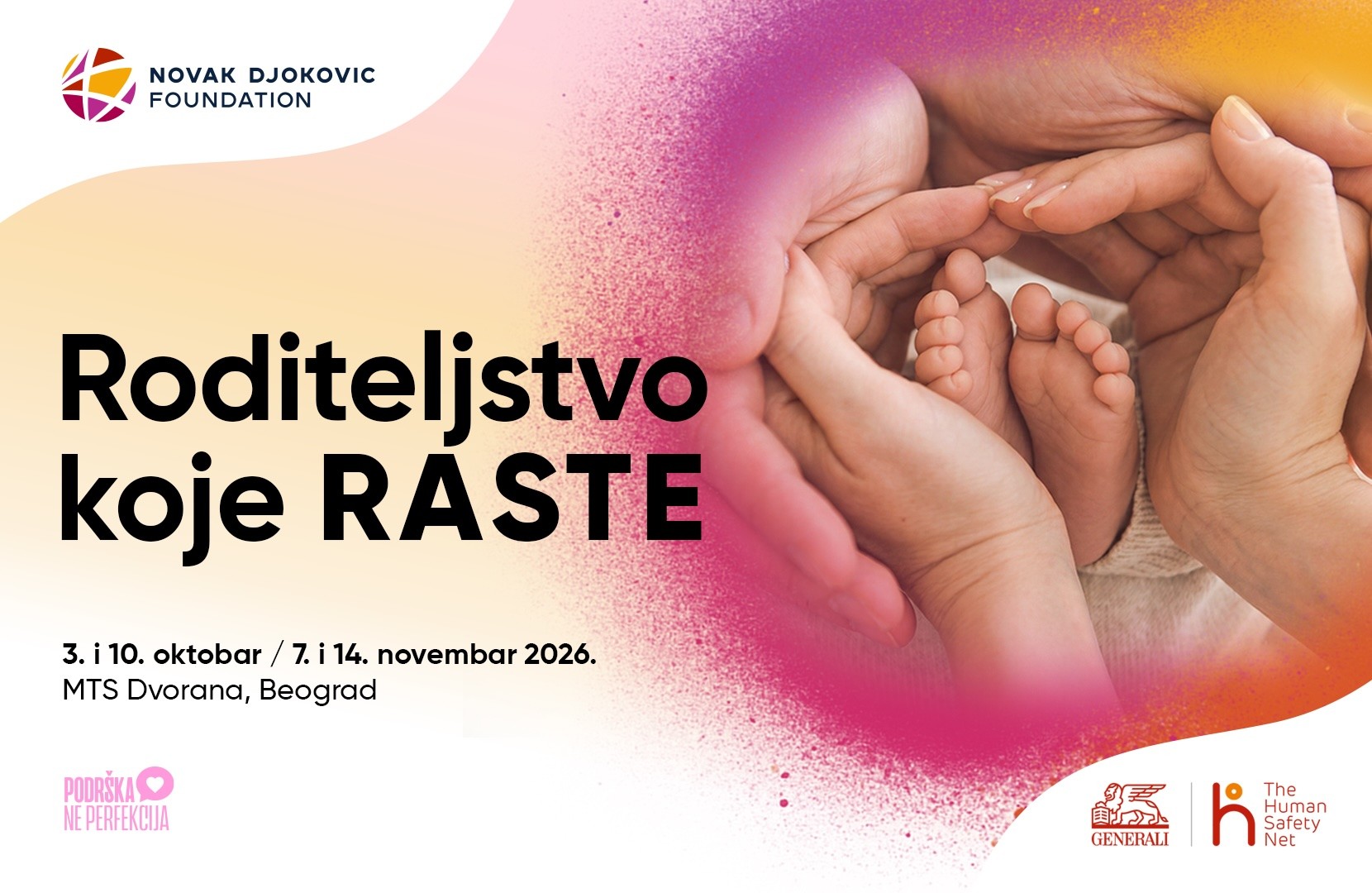

Ahead of the “Roditeljstvo koje raste” conference, we had the opportunity to speak with one of our speakers, Dr. Nirvana Pištoljević, about the importance of early development and everything the first years of life bring for both children and parents.
Nirvana shared several important insights with us about why this period matters so much, how to monitor a child’s development, and why timely support is one of the most important elements of early development. We share her thoughts below.
The earliest period of life, beginning at conception, is one of the most important stages of human development.
The changes that take place almost imperceptibly, quite naturally, are actually laying the foundations for all future learning, health, and behaviour… Today, we know that the most intensive period of brain development takes place precisely during the first years of life. From birth, and even before birth, a child builds the foundations for learning, communication, behaviour, emotional development, and the ability to form relationships with others through every experience. Genetics provides us with basic guidelines for development, but the environment plays a key role in shaping it.
The brain during the earliest stage of development is a system that is constantly changing, connecting, and adapting. Every look, smile, word, touch, game, and response from an adult to a child’s attempt to communicate contributes to this process. When a baby babbles, points, cries, or seeks a parent’s gaze, and the adult responds with a look, a smile, a word, a touch, or a hug, something much more important than an ordinary interaction takes place between the child and their environment. The foundations for future learning and development are being built. That is why early childhood is not simply one of the stages of development. It is the period in which we lay the foundations for everything that comes later. Alongside nutrition, it is necessary to provide a safe and stimulating environment, support parents and promote responsible parenting, and enable the building of stable foundations for the future. It is extremely important to understand everything that can positively and negatively affect development during this remarkable period, to recognise play as the most important form of learning, and to always look at a child’s development holistically, across all five developmental areas (motor development, speech and communication, cognition, independence, and socio-emotional development).
When Development Does Not Follow the Expected Path
Every child is unique. Children differ in their interests, in the way they explore the world, and in the speed at which they acquire individual skills. However, development is not completely unpredictable. There are patterns that allow us to know which skills, approximately, emerge during a particular period. When a child significantly deviates from the expected developmental trajectory of their peers in their environment, this is a reason to pay attention.
Some signs are very obvious. Others are so subtle that they are easily overlooked or attributed to the idea that a child is “just a little lazy”, “shy”, “stubborn”, or that “dad/grandpa/uncle also started speaking quite late”.
The problem arises when waiting becomes a substitute for taking action. Early detection does not mean seeking a diagnosis at all costs. It means trying to understand, as early as possible, how a child learns, what they can already do, where they need support, and what we can do to enable the best possible development. This is where the enormous value of early developmental monitoring lies.
Why Is Time So Important?
One of the most important reasons is neuroplasticity, the brain’s ability to change based on experience. This ability is particularly pronounced during the first years of life. The brain rapidly establishes and strengthens the connections needed for learning and functioning, while connections that are not used are gradually lost. This is why the experiences a child has, or those that are missing, during early childhood have such a powerful influence.
This does not mean that nothing can be learned or changed after the age of three, five, or eight. Of course it can. We learn throughout our lives, but the greatest developmental leap in a person’s life takes place from conception to the age of three. This means that early childhood offers an opportunity to make use of a period when the brain is particularly ready for learning and change.
When a child has developmental difficulties, this is precisely why we do not want to lose valuable time. Early intervention is not a promise that every child will “catch up” with their peers. It is much more than that. It is a systematic way of providing a child with the targeted opportunities, experiences, and support they need to develop their abilities and reach the highest possible level of independence and functioning in society.
Parenting That Grows
Early development, as well as the challenges that accompany parenting through different stages of childhood, will be explored at the “Roditeljstvo koje raste” conference, organized by Novak Djokovic Foundation as part of the Support, Not Perfection program.
The first session, taking place on October 3. at MTS Dvorana in Belgrade, will focus on “From Pregnancy to Age 6 – How Early Development Shapes the Child, the Parent, and Their Shared World”, with Dr. Nirvana Pištoljević among the speakers.
Across four sessions, the conference will create space for conversations about child development and the challenges of parenting – from early development and relationships with teenagers to emotions, relationships, screens, values, and the questions that accompany children and parents through different stages of growing up.