
Most parents today don’t love their children any less than previous generations, quite the opposite. We strive to understand them, listen to them, protect them from pain, and give them a childhood filled with love and security.
But it’s worth pausing to ask one important question:
In trying to protect our children from every uncomfortable experience, are we unintentionally depriving them of the very experiences that help them become resilient, capable adults?
Developmental psychology has shown for decades that children thrive when they are raised by parents who receive them with warmth, emotional availability, and clear, consistent boundaries. This parenting approach is consistently associated with stronger emotional regulation, greater independence, healthier social relationships, and higher psychological resilience.
Frustration Is Not the Enemy of Childhood
The truth is simple:
Frustration is not the enemy of childhood. It is an inevitable and essential part of it.
Waiting their turn. Losing a game. Receiving a disappointing grade. Feeling let down. Hearing the word “no.”
These moments don’t weaken children.
They are the moments when, with the support of a safe and caring adult, children learn to regulate their emotions, develop patience, delay gratification, and discover that they are capable of overcoming challenges.
Boundaries Matter
Boundaries are not punishment.
They are one of the greatest expressions of love.
Children don’t feel safe because they can do whatever they want. They feel safe because they know there is a calm, confident adult who can guide them with consistency, respect, and care.
Predictability helps a child’s brain develop a sense of safety and control. When parents remain consistent, children gradually build self-control, learn to delay gratification, and strengthen their ability to tolerate frustration, skills that form the foundation of emotional resilience.
Boundaries Should Be Communicated with Love
When children push limits through tantrums, resistance, or harsh words, they don’t need louder voices from their parents.
They need calm, steady ones.
Parents need to remain grounded and in control of their own emotions. Setting boundaries does not mean raising your voice, intimidating your child, or punishing them. Nor does it mean giving in every time they cry.
The healthiest boundary is calm, clear, and compassionate.
Parents can acknowledge their child’s feelings while still holding firm to their decision. For example:
Child: “I want more screen time!” (starts crying)
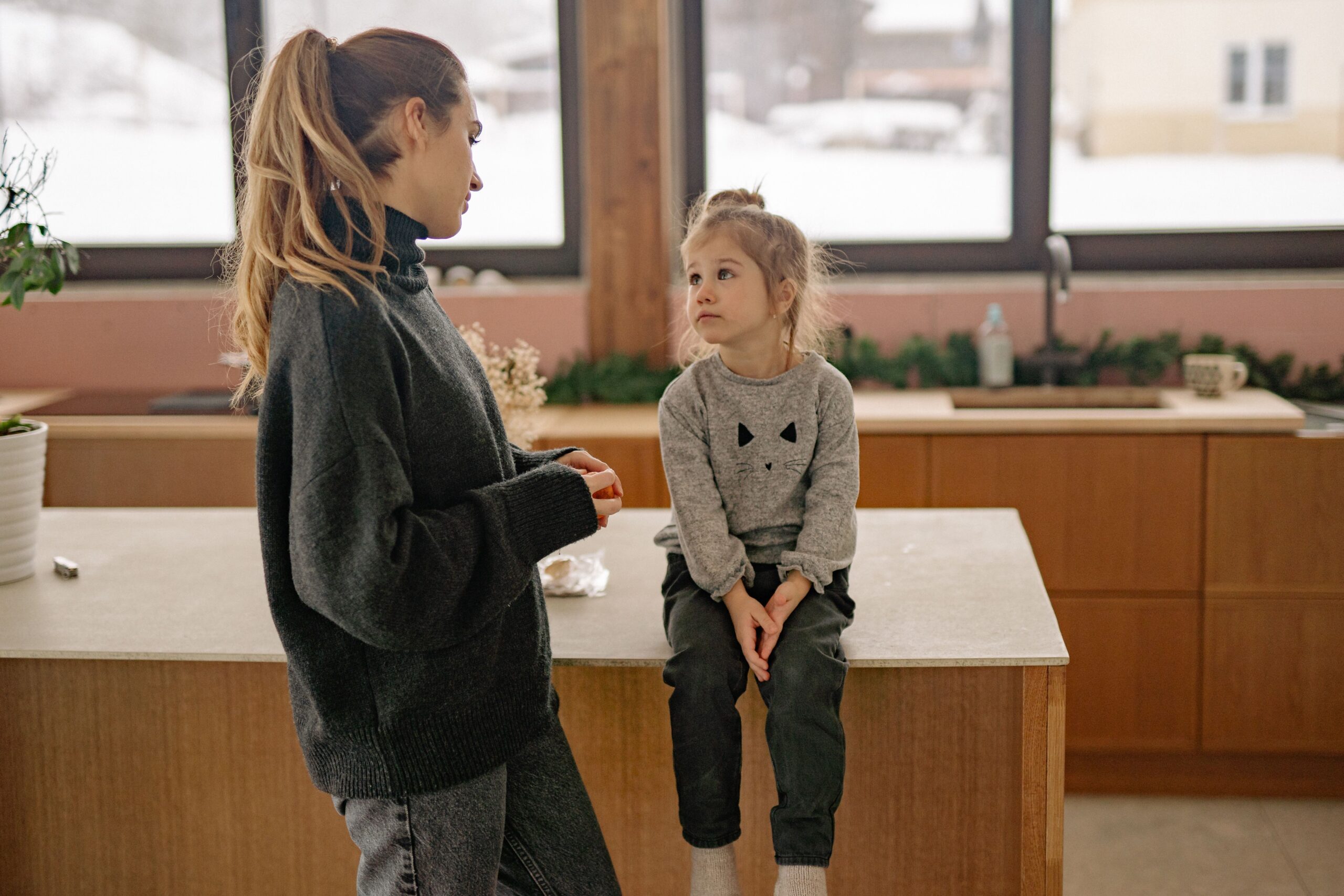
Parent:“I can see you’re upset because you’d like to keep playing. I understand it’s hard to stop. Screen time is over for today. I’ll stay with you until you’ve calmed down.”
What is the child learning through this?
- My feelings are accepted.
- Boundaries don’t change because I’m upset.
- The adult can handle my big emotions.
- I can learn to handle them too.
This is exactly how emotional resilience develops. Without arguing. Without negotiating. Without giving in. Without shouting.
The child may not stop crying immediately. But they receive a far more valuable message: Disappointment is not dangerous. It can be endured.
Children Remember How We Made Them Feel
Children remember far less of what we say than how we say it.
When a parent raises their voice, a child’s nervous system can quickly shift into a defensive state. Learning becomes harder, listening decreases, and impulsive reactions increase.
By contrast, a calm, steady, and confident voice allows children to borrow the parent’s sense of calm.
In neuropsychology, this process is called co-regulation—children first learn to regulate their emotions with the support of a calm adult, and over time develop the ability to regulate themselves.
The goal isn’t to be louder than your child. A calm voice is not a sign of weakness. It is a sign of inner strength, confidence, and parental leadership.
Empathy and Boundaries Go Hand in Hand
The most effective parenting doesn’t choose between warmth and authority.
It brings them together.
Empathy says: “I see how you’re feeling.”
A boundary says: “And I’m still going to stick with my decision.”
Children need both messages.
Research in developmental neuroscience shows that executive functions, including self-control, planning, cognitive flexibility, and emotional regulation develop through repeated experiences in which a calm adult provides emotional support while consistently maintaining healthy boundaries.
The Goal Isn’t to Eliminate Frustration
The goal of parenting is not to make sure children never experience frustration. The goal is to help them, through our love, our presence, and our calm guidance, learn to understand frustration, tolerate it, and move through it.
Children don’t become resilient because they never fall.
They become resilient because every time they fall, there is a calm, caring adult beside them who believes they can get back up.
That belief eventually becomes the child’s own.
Love Sometimes Sounds Like “No”
Boundaries are among the quietest and most powerful expressions of parental love.
They are not walls that limit children. They are lighthouses that help guide them safely forward.
Without boundaries, children don’t gain more freedom.
They lose a sense of security.
Because it is within clear, consistent, and loving boundaries that a child’s heart learns to feel safe—and their character grows strong.
If you’re looking for practical tools, and support along the way, explore our Support, Not Perfection program. And if you’d like to expand your knowledge even further, visit our Online Academy where you’ll find a wide range of courses and resources on parenting, child development, and family well-being.