
Last week, in the first part of our conversation with Dr. Sci. Nirvana Pištoljević, we explored why the first years of life are so important and how experiences during this earliest period lay the foundations for learning, development and the relationships a child builds with the world around them.
This week, we continue our conversation about early childhood development and share the second part of Nirvana’s text, in which she speaks about the role of parents, the importance of collaboration between parents and professionals, and why timely support is one of the key elements of early intervention.
Because when we talk about early development, we are not simply talking about recognizing when something is not going as expected. We are talking about understanding the child, their needs and strengths, and providing support at the time when they need it most.
Parents Are Our Most Important Partners
Parents are often the first to notice that their child is developing differently, but this is precisely when they may find themselves caught between their own intuition and messages from those around them telling them not to worry, that “every child has their own pace,” or that “everything will fall into place.” Such waiting can sometimes mean losing precious time, while feelings of guilt can make the situation even more difficult for parents.
Parents should not be expected to assess their child’s development on their own, but their observations must be taken seriously. As professionals, it is our responsibility to listen to them, offer a reliable, scientifically validated assessment, and explain what a particular finding means, but also what it does not mean. It is equally important that we work together with parents to understand the child’s needs and strengths, the dynamics of the family, and jointly determine the next steps.
When parents’ knowledge of their own child is combined with professional expertise and reliable assessment, we create the best foundation for timely support. The goal of early intervention is not only to identify a difficulty, but to recognise as early as possible how we can help a child learn, develop and reach their full potential.
Early Intervention Is a Shared Responsibility
When we talk about early development, it is important to understand that a child does not grow and develop in an isolated environment. They live within a family, attend kindergarten and encounter different professionals and adults who may notice developmental differences. That is why early detection and support cannot be the responsibility of a single professional, nor of parents alone.
A parent may notice a change that no one else has observed. An educator may notice that a child communicates or participates in a group differently. A developmental specialist can bring together different pieces of information, consider the family history, use assessment tools, and help determine which next steps are best for the child’s early growth and development, as well as for the family.
When they work together, exchange information and share an understanding of child development, there is a greater chance that a difficulty will be recognized in time and that the child will receive appropriate support.
This is precisely why, at EDUS in Sarajevo, we have spent years developing knowledge, tools and practices that allow us to look at a child’s development not only through the question “Does the child have a diagnosis?”, but through a much more important question: “How is this child developing, what are their strengths, where do they need support, and what can we do to help them progress?”

From Recognition to Timely Support
I believe this is one of the most important changes that has taken place in our understanding of developmental difficulties. A diagnosis should no longer be the end of the road. It should be the beginning of understanding and support. At the same time, we should not wait for a diagnosis before providing a child with support.
If we see that a child is not developing a particular skill at the expected pace, we can begin monitoring their development, adapting their environment, teaching parents how to support their child, and involving professionals who can help, while continuing the assessment process and, when necessary, the diagnostic process.
That is the essence of early intervention – continuous support.
A System That Sees the Child in Time
In Serbia, as well as in Bosnia and Herzegovina, we have professionals with knowledge, experience and motivation. We have families who want to help their children. We have kindergartens, healthcare institutions, schools and organisations that can all be part of this process.
What we still lack is a sufficiently connected system in which information travels with the child, rather than remaining within individual institutions. We need greater investment in early developmental monitoring and, consequently, early detection. We need continuous professional education and the introduction of innovative, scientifically validated methods of working with children. We need to empower parents. And we need early intervention to be available when a child needs it.
A few months in the life of an adult may seem like very little. In the life of a young child, a few months can be an enormous period for learning and development. That is why, when we talk about early childhood, we are not talking only about the first few years of life. We are talking about the foundation upon which a child will build everything that comes afterwards.
And so, after all these years of working with children, families and professionals, my belief is very simple:
We cannot change every factor that influences a child’s development. But we can decide how quickly we will notice that a child needs support and how quickly we will respond to that need.
Time is one of the most important resources a child has. “Early” intervention means acting during the period from birth to the age of three, in an intensive and holistic way. It means continuous support across all areas of development – social-emotional, motor, cognitive, speech and language development, as well as the development of independence.
In early intervention, timeliness is not simply an advantage. It is a responsibility.
Reference:
Pištoljević, N. (2025). Rani rast i razvoj djece – period neograničenih mogućnosti; Kratki vodič za stručnjake i roditelje. EDUS, Sarajevo, BiH.
Pištoljević, N., Džanko, E., Zubčević, S. (2022). EDUS Razvojne behavioralne skale-II za skrining i praćenje razvoja djece od prvog mjeseca do navršenih šest godina starosti (EDUS RBS-II; Treće prilagođeno izdanje): EDUS, Sarajevo, BiH.
Autor: dr sci. Nirvana Pištoljević
Parenting That Grows
The importance of early development, as well as the challenges that accompany parenting through different stages of growing up, will also be explored at the “Parenting That Grows” conference, organised by the Novak Djokovic Foundation as part of the “Support, Not Perfection” program, with the support of Generali Serbia and The Human Safety Net Serbia.
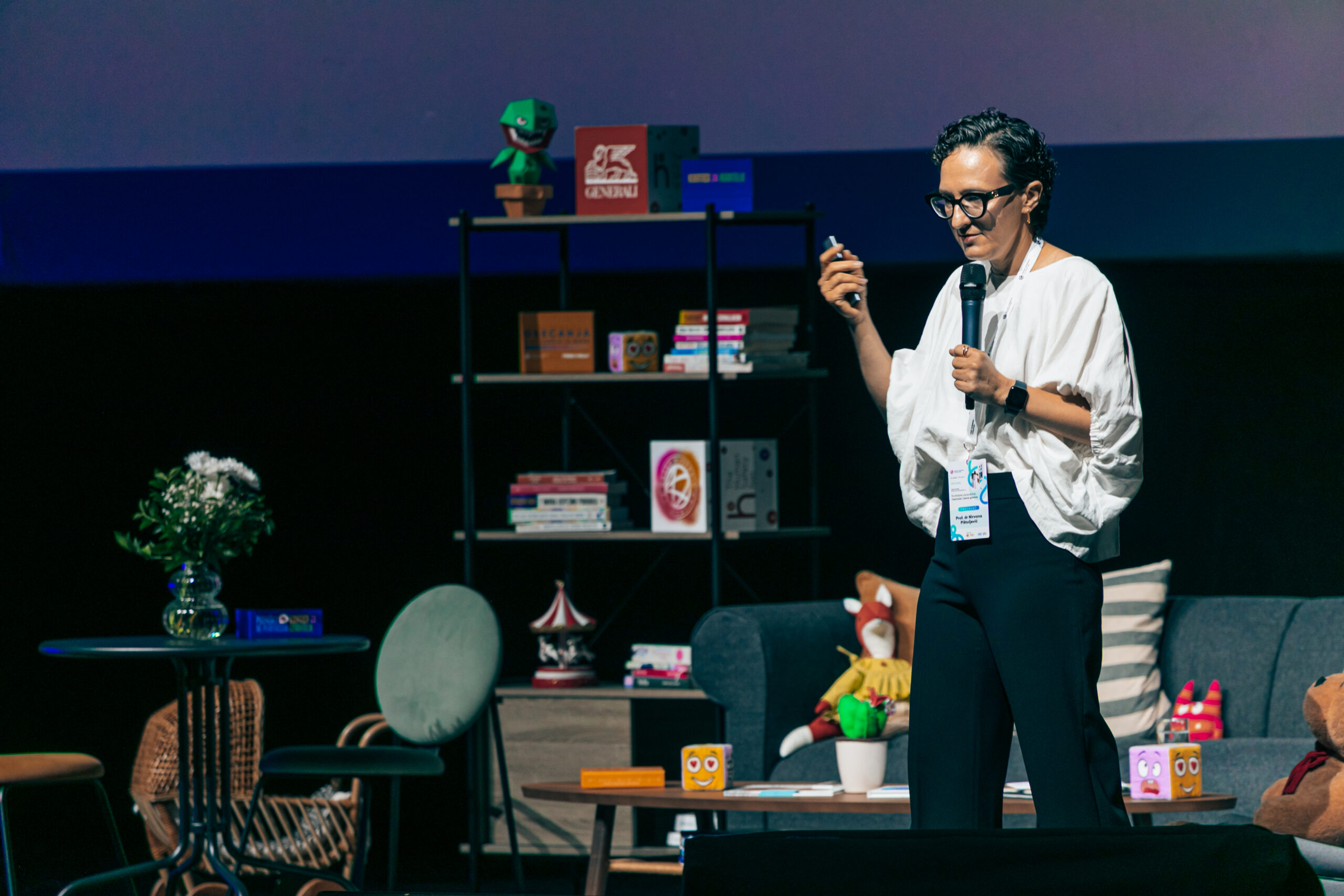
The first session, taking place on 3 October at MTS Dvorana in Belgrade, is dedicated to the topic “From Pregnancy to Age 6 – How Early Development Shapes the Child, the Parent and Their Shared World.” Among the speakers sharing their knowledge and experience will be Dr. Sci. Nirvana Pištoljević.
Across four sessions, the conference will create space for conversations about child development and the challenges of parenting – from early development and relationships with teenagers to emotions, relationships, screens, values and the questions that accompany children and parents throughout different stages of growing up.
Learn more about the “Parenting That Grows” conference and reserve your spot.